Choosing a school, college, or university can feel overwhelming. Prospective learners may read course pages, attend open days, and compare brochures, yet still wonder what studying there is actually like.
This is where student ambassadors strengthen education promotion in a way traditional marketing often cannot.
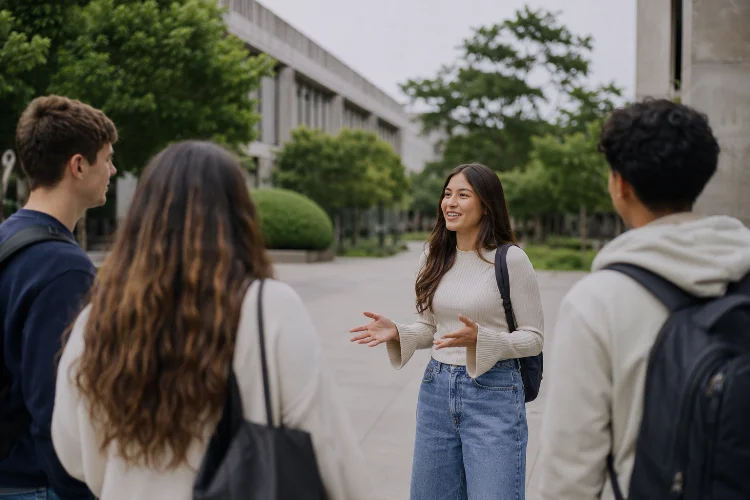
Current students can share genuine experiences, answer practical questions, support campus events, and help prospective learners imagine themselves in a new educational environment.
When properly trained and supported, ambassadors become a valuable bridge between an institution and the people considering joining it.
What Is a Student Ambassador?
A student ambassador is usually a current student who represents their school, college, university, or education programme to prospective learners, families, visitors, and sometimes the wider community.
Their responsibilities vary between institutions.
For example, the University of Kansas describes its ambassadors as current students who represent the university to visitors and future students. Their duties include campus and residence-hall tours, discussion panels, and conversations with prospective learners.
Sacred Heart University similarly describes ambassadors as important members of its undergraduate admissions and recruitment work, welcoming families, leading tours, and serving as a resource for future students.
The role is therefore much more than simply wearing an ambassador badge at an event. Students become part of the institution’s communication and outreach experience.
Student Ambassadors Add an Authentic Student Voice
Education providers naturally want to present their programmes positively.
The challenge is that prospective learners know official marketing materials have been carefully prepared. They may therefore want another perspective: What does a current student actually think?
Student ambassadors can provide that perspective.
They can discuss everyday experiences such as attending classes, meeting lecturers, finding study spaces, joining clubs, managing assignments, living on campus, or adapting during the first few months.
Lynn University, for example, says its student admission ambassadors provide prospective students and families with insight into student life based on their own experiences.
That firsthand voice makes education promotion feel more personal.
Instead of simply hearing that a university has a “supportive learning community,” a prospective student might hear how an ambassador struggled during the first semester, contacted an adviser, and gradually adjusted.
Specific experiences are often easier to understand than polished marketing language.
Peer-to-Peer Conversations Can Build Trust
Prospective students sometimes ask current students questions they might hesitate to ask an admissions officer.
“Is the workload really difficult?”
“Was it easy to make friends?”
“What surprised you after starting?”
“Do students actually use the support services?”
These conversations can create a different level of comfort because the ambassador and prospective learner may have similar experiences or concerns.
St. John’s University describes student ambassadors as an important link between prospective students and the university, offering advice and information based on their own student experience.
Peer communication becomes especially valuable when ambassadors are encouraged to be honest.
They do not need to pretend everything about student life is perfect. A credible ambassador might explain that a programme is academically demanding while also discussing the support available.
That balance improves credibilty.
The goal should never be to train students to repeat marketing scripts word for word. Their value comes partly from sounding like real students.
Ambassadors Make Campus Visits More Engaging
Campus visits are one of the most visible places where student ambassadors support education promotion.
A prospective learner can find information about buildings online, but walking around campus with someone who actually studies there creates a different experience.
Ambassadors can explain what happens inside those spaces.
A library becomes more than a building when a student explains where they normally study during exams.
A residence hall becomes easier to imagine when the guide describes daily routines. A classroom feels more relevant when the ambassador talks about a project completed there.
Virginia Commonwealth University’s Student Admissions Ambassadors, for example, assist admissions recruitment through activities including daily campus tours and open houses.
The most effective tours usually mix useful information with personal experience.
Prospective learners do not only want directions. They are trying to answer a larger question:
Could I see myself studying here?
Ambassadors can help them picture that possibility.
Student Ambassadors Strengthen Outreach Events
Ambassadors can contribute beyond campus tours.
They may participate in school visits, education fairs, information evenings, open days, webinars, question-and-answer sessions, community events, or recruitment programmes.
McLennan Community College, for example, lists activities such as campus tours, college fairs, recruiting events, enrollment promotion, and support for prospective students among its ambassador responsibilities.
This gives education providers something particularly useful: a student perspective within formal outreach.
Imagine a college visiting a secondary school.
An admissions representative might explain entry requirements, programme structure, tuition, and application deadlines.
The student ambassador can then describe what their first week felt like, how they selected classes, and what they wish they had known before starting.
Those two voices complement each other.
Staff provide official information. Students provide lived experience.
Together, they can create a more relevent outreach session.
Ambassadors Can Support Digital Education Promotion
Student ambassadors are no longer limited to physical events.
They can also contribute to websites, online chats, webinars, social media, student blogs, short videos, virtual campus tours, and digital question-and-answer sessions.
Drexel University’s LeBow College of Business, for instance, encourages prospective students to connect with undergraduate ambassadors to discuss courses, student life, experiential learning, and living in Philadelphia.
Other universities involve students directly in social media content. Nazareth University describes a programme in which student ambassadors work with its social media team to create engaging content for university channels.
This approach can make digital communication feel less institutional.
A short video showing what a student’s normal day looks like may answer questions that a traditional advertisement cannot.
Ambassadors might show how they move between classes, where they eat lunch, how laboratory sessions work, or what happens during a student society meeting.
The important thing is authenticity.
Content should be guided enough to remain accurate and appropriate without making every post feel scripted.
Diverse Ambassadors Help More Learners Feel Represented
There is no single “typical student.”
Prospective learners may differ by academic background, nationality, age, socioeconomic circumstances, disability, location, culture, or previous educational experience.
An ambassador programme should reflect that diversity where possible.
The University of Northern Iowa says its Panther Ambassadors help recruit diverse future student classes while providing prospective learners with personal perspectives on academics and student life.
Representation matters because prospective learners often have very specific concerns.
A first-generation university applicant may want to speak with someone who also entered higher education without family experience of university.
An international applicant may want to understand cultural adjustment. A commuter student might care about transportation and spending long days on campus.
Universities UK has highlighted programmes supporting first-generation students that include opportunities to meet student ambassadors and participate in peer mentoring.
Seeing someone with a similar experience can make an unfamiliar educational environment feel more accesible.
Good Ambassadors Need Training
Authenticity does not mean sending students into recruitment events with no preparation.
Ambassadors need training.
They should understand key institutional information, safeguarding expectations, event procedures, accessibility considerations, professional communication, and what to do when someone asks a question they cannot answer.
Indiana University Columbus, for example, states that incoming student ambassadors participate in training before beginning their duties.
Training also protects the ambassador.
A prospective learner might ask complicated questions about admissions decisions, immigration requirements, financial aid, or academic policy. Students should know when to refer that person to a qualified staff member rather than guessing.
A simple rule works well:
Share your experience confidently, but do not invent official answers.
Good training makes ambassador communication more accurate without removing the student’s personality.
The Role Also Benefits the Ambassadors
Student ambassador programmes can support education promotion while providing valuable development opportunities for participating students.
Ambassadors repeatedly practise public speaking, communication, teamwork, leadership, event support, and problem-solving.
They may learn how to speak with people from different backgrounds and how to represent an organisation professionally.
Advance HE has documented higher-education initiatives where students were trained and empowered to participate in school and community outreach, connecting partnership work with student employability development.
This creates a useful two-way relationship.
The institution gains knowledgeable student representatives, while ambassadors develop skills and experience that can be valuable beyond university.
Programmes should therefore treat ambassadors as participants who need development and support-not simply as free promotional labour.
Measure the Impact of an Ambassador Programme
A large group of ambassadors does not automatically mean the programme is effective.
Education providers should examine what the ambassadors actually contribute.
Useful measures could include prospective student feedback, campus-tour satisfaction, event participation, online engagement, enquiries generated after ambassador conversations, and ambassador retention.
Qualitative feedback can be especially useful.
Ask prospective learners whether speaking with a student helped them understand the institution better. Ask ambassadors which questions they hear repeatedly.
Those questions can reveal gaps in existing promotional materials.
If dozens of prospective learners repeatedly ask about accommodation costs, for example, the institution may need clearer information about accommodation on its website.
Student ambassadors therefore do more than communicate outward. They can also bring useful feedbak back into the organisation.
Student ambassadors strengthen education promotion by adding authenticity, peer-to-peer trust, practical insight, and a genuine student perspective to outreach activities.
They can support campus tours, digital communication, recruitment events, and conversations with future learners.
For education providers, the next step is simple: build an ambassador programme around diverse student voices, proper training, and honest communication.
The strongest ambassadors do not sound like advertisements-they sound like students worth listening to.